
How to Budget for Corporate Event AV: A Practical Guide
If you've ever planned a corporate event, you know the feeling: the AV line item on the budget lands and it's either shockingly high, frustratingly vague, or both. Audio visual production is consistently one of the most misunderstood costs in event planning — and that misunderstanding leads to underfunding, last-minute surprises, and compromises that undermine the very experience you're trying to create. This guide is designed to fix that. Whether you're a seasoned meeting planner or organizing your first company conference, you'll walk away understanding what goes into AV pricing, what things actually cost, and how to make smart decisions with whatever budget you have.
Why AV Is the Most Misunderstood Line Item in Event Budgets
Most event budget categories are relatively intuitive. Venue rental is a room rate. Catering is a per-head cost. Travel and hotel are predictable. But AV? AV is a service that combines specialized equipment, skilled labor, creative design, logistics, and engineering — all bundled into a single line item that's hard to benchmark without context.
The challenge is compounded by the fact that no two events have the same AV needs. A 50-person board meeting in a hotel conference room has almost nothing in common with a 2,000-person general session in a convention center ballroom, yet both fall under the umbrella of "corporate event AV." Comparing their costs is like comparing a sedan rental to chartering a bus — they solve fundamentally different problems.
Another source of confusion is the in-house AV trap. Many venues include "basic AV" in their rental package, which typically means a projector, a screen, a podium microphone, and perhaps a few ceiling speakers. Event planners see this and assume their AV is covered, only to discover during the event that the projector is dim, the microphone picks up every cough in the room, and there's no way to play a video with sound. The gap between "included AV" and "professional event production" is enormous, and it's where budgets get blindsided.
What Goes into an AV Quote
Understanding the components of an AV proposal removes the mystery from the pricing. Here's what a comprehensive quote from a professional AV company typically includes:
Equipment
This is the hardware: projectors, LED walls, screens, speakers, microphones, mixing consoles, video switchers, cameras, lighting fixtures, staging, and rigging hardware. Equipment costs vary dramatically based on quality, quantity, and technology. A single high-lumen projector for a general session might cost several times more per day than a basic conference room projector, because it outputs enough light to produce a bright, clear image on a 20-foot screen in a room with ambient light. Similarly, an LED video wall costs more than a projector-and-screen setup, but it delivers a visual impact that projection simply cannot match in certain environments.
Labor
Professional AV is a labor-intensive service. Your quote will include the technicians, engineers, and operators who design your system, load it in, set it up, run it during the event, and tear it down afterward. This isn't unskilled labor — your audio engineer is calibrating speaker arrays and managing wireless frequencies, your video engineer is switching between camera feeds and presentation content in real time, and your lighting designer is programming cues that shape the look and feel of your stage. For multi-day events with complex programming, labor often represents 30 to 50 percent of the total AV budget.
Travel and Logistics
Equipment doesn't teleport to your venue. Trucking, freight, hotel rooms for traveling crew, per diem, and parking all factor into the cost. For local events, these costs are minimal. For events that require your AV team to travel across the state or the country, they can add 10 to 15 percent to the overall budget. A reputable AV equipment rental provider will itemize these costs clearly so there are no surprises.
Power and Rigging
Large AV systems need significant electrical power, and convention centers charge for dedicated power drops. If your stage design includes flown speakers, lighting trusses, or overhead screens, you'll also need structural rigging — which requires certified riggers and venue approval. Power and rigging are often overlooked in early budget estimates, but for large-scale events they can represent a meaningful cost.
Design and Project Management
Behind every smooth event is weeks of pre-production: site visits, floor plan design, equipment specification, content formatting, technical drawings, show flow creation, and coordination with venue staff. Some AV companies absorb these costs into their equipment and labor rates, while others list them as a separate line item. Either way, you're paying for this expertise — and you should want to be, because this planning is what prevents problems on show day.
Typical Budget Ranges for Different Event Types
The ranges below are general guidelines based on typical corporate events in mid-tier markets like San Antonio, Austin, and Houston. Your actual costs will depend on your specific requirements, venue, and the level of production value you need. Use these as starting points for budget planning, not as firm quotes.
Small Meeting or Executive Presentation (20–75 people)
Think board meetings, leadership retreats, or departmental all-hands in a hotel meeting room. You'll typically need a projector and screen (or a large flat-panel display), a few wireless microphones, a basic speaker system, and a technician to manage it all. Budget range: $2,000 to $7,500 for a single day. If you're adding video recording or a confidence monitor for the presenter, plan toward the higher end.
Medium Conference or Multi-Room Event (100–500 people)
This is where AV complexity — and cost — begins to scale. A medium conference might include a general session room with professional audio, dual screens, stage lighting, and IMAG cameras, plus two to six breakout rooms each needing their own AV setup. You'll need a technical director to coordinate across rooms, dedicated audio and video engineers for the main room, and technicians rotating among breakout spaces. Budget range: $15,000 to $60,000 depending on the number of rooms, event duration, and production complexity.
Large General Session or Multi-Day Conference (500–5,000+ people)
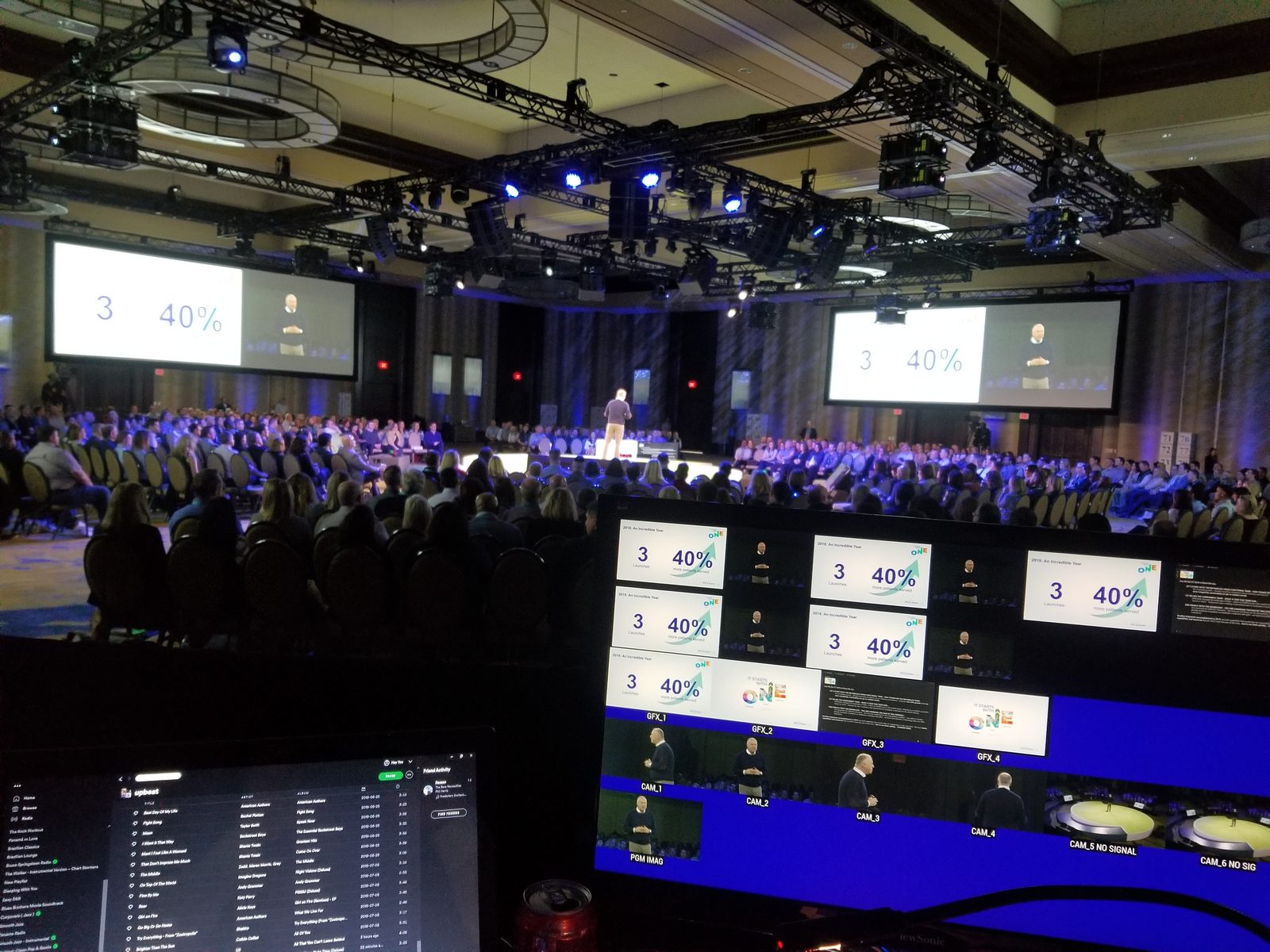
Large-scale events in convention centers or hotel grand ballrooms demand serious production infrastructure. You're looking at line array speaker systems, LED video walls or high-lumen projection with multiple screens, full stage lighting design, live camera switching with IMAG, potentially live streaming, and a crew of 10 to 30+ technicians. A general session AV package at this scale requires extensive pre-production, site visits, and rehearsal time. Budget range: $50,000 to $250,000+ depending on the scope. Flagship corporate events and product launches regularly exceed these figures.
Where to Invest vs. Where You Can Save
Every event planner faces the reality of a fixed budget. The key is spending those dollars where they have the greatest impact on the attendee experience. Here's a practical framework:
Always Invest In
- Audio quality. This is the single most important AV element at any event. If your audience can't hear clearly, nothing else matters. Budget for quality microphones, properly sized speaker systems, and a skilled audio engineer.
- A technical director. For any event with more than one room or any production complexity, a dedicated TD who manages the show flow, coordinates crew, and solves problems in real time is worth every dollar.
- Adequate labor. Understaffing is the fastest way to guarantee technical problems. Make sure your crew has enough people to run equipment, manage transitions, and troubleshoot without being stretched thin.
- Pre-production and site visits. The upfront planning is where problems are caught before they become expensive on-site emergencies. Never cut the site visit or skip a technical rehearsal to save money.
Where You Can Save
- Scenic design and stage sets. A well-lit stage with a clean backdrop looks professional without custom-built scenic pieces. Fabric drapes, well-designed PowerPoint templates, and strategic lighting can achieve a polished look at a fraction of the cost of a custom stage build.
- Recording and streaming (if not critical). If your event doesn't need to be live-streamed or recorded, eliminating those services can free up significant budget for the in-room experience.
- Breakout room complexity. Breakout rooms can often share equipment between sessions if schedules allow. Rolling carts with portable AV setups can cover multiple rooms at a lower cost than dedicated installations in each room.
- Uplighting and decorative effects. Atmospheric lighting is lovely, but it should be funded only after your core audio, video, and stage lighting needs are met. A few well-placed LED uplights can go a long way.
Red Flags in AV Quotes
Not all AV proposals are created equal. When you're reviewing quotes, watch for these warning signs that suggest you may not be getting the quality or transparency you deserve:
- Vague or bundled line items. If the quote says "AV package — $25,000" without breaking down equipment, labor, and logistics, you have no way to evaluate what you're getting or compare it meaningfully to other proposals. Demand itemization.
- No site visit included. Any AV company quoting a significant event without visiting the venue (or at minimum reviewing detailed floor plans and photos) is guessing. Guessing leads to inadequate equipment, unexpected costs on-site, and technical problems that could have been prevented.
- No technical director or show caller. If the proposal doesn't include a dedicated person to run the show, your event will rely on individual technicians making independent decisions with no central coordination. For anything beyond a single-room meeting, this is a recipe for inconsistency.
- Suspiciously low pricing. If one quote is dramatically cheaper than the others, ask why. The answer is usually fewer technicians, lower-quality equipment, no pre-production time, or hidden fees that will appear as change orders later. The cheapest quote almost never represents the best value.
- No contingency or backup equipment. Professional AV companies build redundancy into critical systems — backup microphones, spare projector lamps, standby laptops. If a quote makes no mention of backup plans, ask what happens when (not if) something fails.
- Pressure to sign quickly. Legitimate AV companies will give you time to review proposals, ask questions, and make revisions. If a provider pushes you to commit before you've had a chance to evaluate the scope, that's a red flag.
How to Compare AV Proposals
When you've collected two or three proposals, comparing them can feel like comparing apples to oranges because each company formats their quote differently. Here's a structured approach to make the comparison meaningful:
- Normalize the scope. Make sure each company is quoting for the same rooms, the same number of event days, the same load-in and load-out schedule, and the same basic technical requirements. If one proposal covers four breakout rooms and another covers six, the comparison is invalid.
- Compare labor separately from equipment. Equipment costs are relatively standardized across the industry, but labor philosophies vary. One company may quote more technicians at lower hourly rates while another quotes fewer people at higher rates. Look at the total labor hours and the crew positions included, not just the bottom-line number.
- Evaluate the crew plan. Ask each company to provide a crew list with roles and schedules. A proposal that includes a technical director, an audio engineer, a video engineer, and a lighting operator is fundamentally different from one that lists "two AV techs." You want to know who is doing what.
- Check what's included in "the price." Does the quote include setup and teardown time? Rehearsal time? Travel? Power distribution? Content formatting? These line items can add thousands of dollars if they're excluded from the base quote and added later as change orders.
- Ask about change order policies. Events evolve. Speakers get added, rooms change, schedules shift. Understand how each company handles scope changes — what triggers a change order, what the approval process looks like, and how costs are communicated. A company with a transparent change order process will save you stress and money.
Questions to Ask Your AV Company Before Signing
Before you commit to an AV partner, these questions will help you evaluate whether they're the right fit for your event and your budget:
- Will you conduct a site visit before finalizing the proposal? The answer should be yes for any event of meaningful size. If they can't visit in person, they should at minimum request floor plans, ceiling heights, and photos.
- Who will be my primary point of contact, and will they be on-site during the event? You want continuity between the planning phase and execution. If the person designing your AV plan isn't the person running the show, there's a higher risk of miscommunication.
- What does your crew plan look like? Ask for specific roles and the number of technicians assigned to each room and each show day. This tells you whether the company is staffing appropriately for your event's complexity.
- What backup equipment do you bring? Experienced AV companies have a standard backup package for critical gear. If they can't describe their contingency plan, they don't have one.
- How do you handle last-minute changes? Events rarely go exactly as planned. Understand the company's flexibility, their change order process, and whether they can accommodate reasonable adjustments without major cost escalations.
- Can you provide references from similar events? Ask for references from events of comparable size, complexity, and industry. A company that excels at 50-person corporate meetings may not have the resources or experience for a 2,000-person conference.
- What's included in setup and rehearsal? Clarify whether the quoted price includes adequate time for setup, testing, and technical rehearsal. Cutting rehearsal time to save money is a false economy that almost always leads to problems during the live event.
Final Advice: Plan Early and Communicate Openly
The single best thing you can do for your AV budget is to start the conversation early. Engaging your AV partner during the venue selection process — not after contracts are signed — allows them to identify cost drivers, suggest alternatives, and help you choose a space that works for your technical needs and your budget. A room with built-in rigging points, controlled lighting, and adequate power can save thousands compared to a room where all of that infrastructure has to be brought in.
Be transparent about your budget. A good AV company would rather design a system that delivers the best possible experience within your actual budget than quote a wish-list system that gets painfully value-engineered down to something that satisfies no one. When your AV partner knows your financial constraints from the start, they can make smart trade-offs and prioritize the elements that matter most to your event's success.
At Astro Audio Visual, we walk our clients through every line item, explain the reasoning behind our recommendations, and work within real-world budgets to deliver events that sound and look exceptional. If you're planning a corporate event and want a transparent, no-surprises AV proposal, reach out to our team for a free consultation. We'll help you build a budget that works — and an event that exceeds expectations.
Astro Audio Visual Team
Expert AV production for corporate events in San Antonio, Austin & Houston.